Water Purification
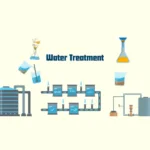
Water treatment means taking out heavy metal like lead or mercury forming an unsaturated solution with water. Water filtration takes care of the dirt and filth that might be floating on the surface or sink at the button from the industrial waste and old drainage system. Some toxicants need to be cleaned as they are dangerous for human life. Clean water production takes special tasks so that water retains its original form without disturbing the equilibrium levels.
We explore ways to clean water, using natural processes which involve ion exchange method, microfiltration, Reverse osmosis process etc. Removing these impurities aims to create liquid suitable for consumption, meal prep, or factory needs; such treatment falls under what we call purification.
The government, under the guidance of the World Health Organization (WHO), sets the standard of drinking water quality to ensure that the water we consume meets minimum contaminant levels and is healthy for our use.
Source of Water Pollution
Water is polluted due to various sources and it is grouped into natural and human-made categories. Some natural pollution includes soil erosion, volcanic activity, and organic decomposition, which gives birth to the process of sedimentation. This decontaminates water.
Even rain brings street garbage and oil from factories into the water.
Water Purification Standard
Water Purification Standards play an important role in defining aqua safety for daily use in homes and for industrial and agricultural purposes. These standards, defined by U.S and water agencies, are strict to follow the rules according to their standard, ensure that water is tested and meets the guidelines of environmental health. The approval and certification of water filters by NSF/ANSI and ASTM provide reassurance that the system is reliable and meets defined safety and health specifications.
Why is Water Purification Important?
Water can be purified by removing harmful chemicals that can cause waterborne diseases like ,diarrhea typhoid and fever. According to the WHO, 88% of the world suffers every year with many cases of diarrheal disease , which is responsible for nearly 1.8 million deaths each year. Ensure to supply clean water which is necessary for community health. Protection of water for household and industrial use avoiding nutrients removal to maintain the natural equilibrium.
Method of Water Purification
Water has been purified since ages, there are two ways for the purification
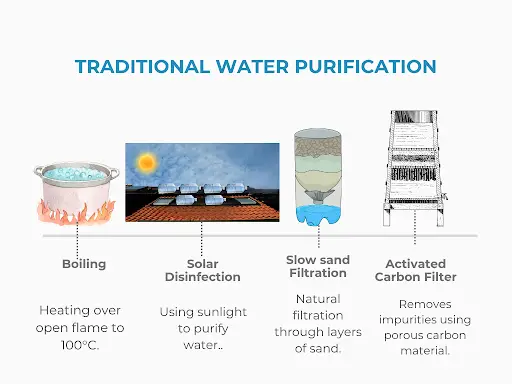
Traditional Purification Method
The traditional water treatment method is simple, highly effective, and reliable.For centuries people have relied on simple ways to make water safe. Boiling kills germs using heat, one of the oldest tricks around. Layers of sand and gravel have a deep impact on the purification process.
These layers trap the impurities giving density to them so that impurities remain at the bottom. Charcoal has antioxidant properties due to which it pulls toxins from liquid like a magnet. Sunlight can purify when bottles sit under the open sky. Such steps remove harmful stuff without fancy tools. Heat-based sterilization destroys pathogens effectively. They’re cheap enough for nearly any household. Clean results come without high expense.. Secondly, it is chemical-free, which ensures immunity and good health in society.
While the traditional methods are low-cost,energy-efficient, and have been used for centuries, this method has limitations. They are unable to cleanse chemical pollutants from water, which is a major drawback. This gives birth to the use of advanced engineered methods, often used in combination with traditional methods, to achieve better and more comprehensive results.
Boiling
Boiling ensures water safety, when water is heated until bubbles burst on top. At 100 degrees, heat wipes out invisible threats – bugs, tiny invaders, wriggling critters. Heat alone won’t clear chemical traces or contaminations inside.
Once boiled, let the water settle on its own till it’s lukewarm. After that, shift it into a fresh vessel – kept aside for holding.
Solar Disinfection (SODIS)
In the SODIS approach, water goes into clear bottles, then sits under direct sunlight – hours matter, anywhere from six to two days – to wipe out harmful microbes. Ultraviolet rays join infrared radiation in dismantling waterborne pathogens, showing how raw nature can clean what we drink.
This simplicity reveals effectiveness rooted in patience rather than speed; trust often shifts toward official water providers instead. This method is also cheap and simple, but does not have the ability for cleansing chemicals and heavy metals.
Slow Sand & Biosand Filtration
A slow sand filter is a natural and gravity-driven filter where water passes through layers of sand slowly (0.1-0.4 m /hour), and bacteria and viruses, like protozoa, algae, and organic matter, are removed.
It is simple but high sanitation performance compared to other traditional filters, but not cost-effective. The main disadvantage is that it is slow, requires a larger area, and requires regular cleaning and demand for sand, which performs water filtration.
Activated Carbon Filters
These filters go by the name charcoal due to their composition – materials packed with carbon, like coconut husks, timber, or raw coal.
Keep in mind, activated carbon filters don’t catch everything. While they handle certain contaminants well, things like dissolved salts slip right through. Nitrates? Not going anywhere. Fluoride also stays behind – untouched. Viruses and bacteria, those tiny troublemakers, pass along just fine.
Activated charcoal traps impurities without costing much while staying simple for aquatic ecosystems.
Activated Carbon Pros
Cons
Artificial (Engineered) Water Purification
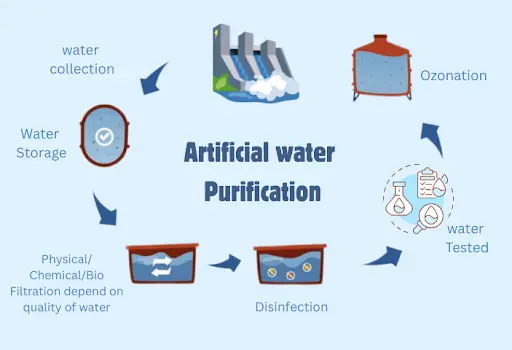
Engineered water purification methods are man-made processes designed to decontaminate. It consists of a multi-stage system, where each stage targets a specific contaminant and produces quality water that meets quality standards for safe drinking water. A list of some Artificial water Purification methods is:
Physical Filtration
It is the first stage in engineered water treatment, where water is passed through different layers of physical Filtration in different methods, which are:
Filters for sand gravel and multimedia on screens
Frequent in city setups or factory networks, these units sift out coarse matter while catching floating debris within flow. Though often tucked underground, their role stays clear – cleaner output begins here, minus the clutter midstream drags along.
Ultrafiltration (UF)
relies on thin membranes that filter out bacteria, also catching certain viruses – commonly applied ahead of Reverse osmosis to prepare the water stream.
Microfiltration (MF)
membranes capture floating particles, algae, alongside protozoa – often used before UF or RO setups.
Nanofiltration (NF)
uses thin membranes to filter out particles like charged ions, tiny organisms, or basic organics – commonly applied when reducing mineral content in water.
Reverse Osmosis (RO)
There are high-performance reverse osmosis membranes which remove all dissolved substances, including salts, heavy metals, and microorganisms on high pressure.
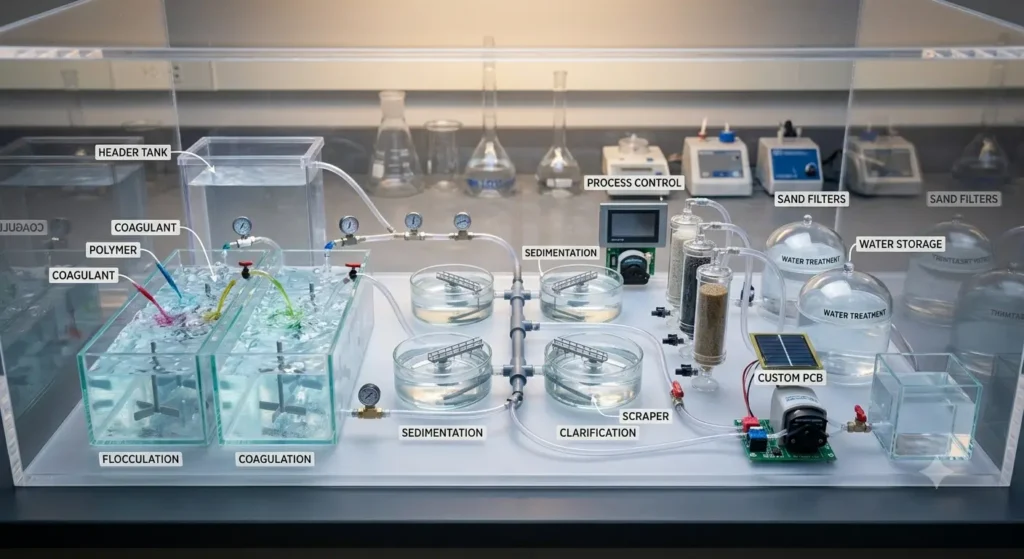
Chemical Water Purification
Through chemistry, impurities in water face reactions – substances step in, shifting toxins into safer forms by ion exchange method. Some agents dismantle pollutants, others halt microbes mid-track. Reactions unfold quietly, altering dangerous molecules one interaction at a time. Cleaned water emerges, stripped of its earlier threat.
Chemical agents wipe out microbes – like bacteria, viruses, and protozoa – while shifting into helpful byproducts performing microfiltration. These transformed elements assist in breaking down organic contaminants, along with certain inorganic ones, turning threats into simple outputs such as carbon dioxide and liquid water.
Chemical treatment works fast, scales easily, and lasts a while after application for clean water production. These methods unfold through several stages:
Coagulation
Flocculation
Sedimentation
Disinfection
Disinfection is sub divided into the following sub topics:
Primary Disinfection
One of the methods to treat water is by chlorinification, sometimes chloramine, water passing through ozone or UV removes leftover bacteria, viruses, even parasites.
Chlorination & Byproducts
We all know chlorine is highly efficient in killing microbial contamination though it can form disinfection byproducts (DBPs) like trihalomethanes, which must be managed because they are very harmful to human health.
Alternatives (Ozone / UV)
Removal of classical organic pollutants from water
The Process of removing Classical Organic Pollutants (COPs) from water is essential to promote public health. Various methods and treatments have been introduced for the removal of contaminants, which are:
Advanced Oxidation Processes (AOP)
AOPs are water-cleaning techniques where hydroxyl radical (OH) reacts with pollutants and produces safe substances like Co2 and H2O. Common AOPs include:
Fenton and Photo-Fenton Reaction
The Fenton process uses Fe+2 and H2O2 to remove pollutants from water in the presence of UV light, innovative modern techniques for water purification.
Ozonation
It is an oxidation process where oxygen dissolves in water and removes harmful bacteria and viruses present in water.
UV/H2O2 System
Combining ultraviolet light with hydrogen peroxide, which helps to neutralize harmful water pollutants.
Electro-Chemical Oxidation
When electric current is passed through electrodes into the water, contaminants are cleaned up from the water.
Adsorption Technique
In this technique, a solid substance is poured into the water, which holds pollutants towards it and purifies water. These materials are efficient and cost-effective for removing waterborne pathogens. List of adsorbents include:
Activated Carbon
Activated Carbon work as a sponge which holds pollutants like pesticides from the water passing through.
Zeolites
We know Zeolites are man-made natural minerals they have structure like honeycomb; this structure helps to trap organic pollutants and gases.
Organoclays
Organoclays are natural clays that are perfect for grabbing greasy pollutants in water.
Biological Method of Water Purification
Biological Method Pros
Cons
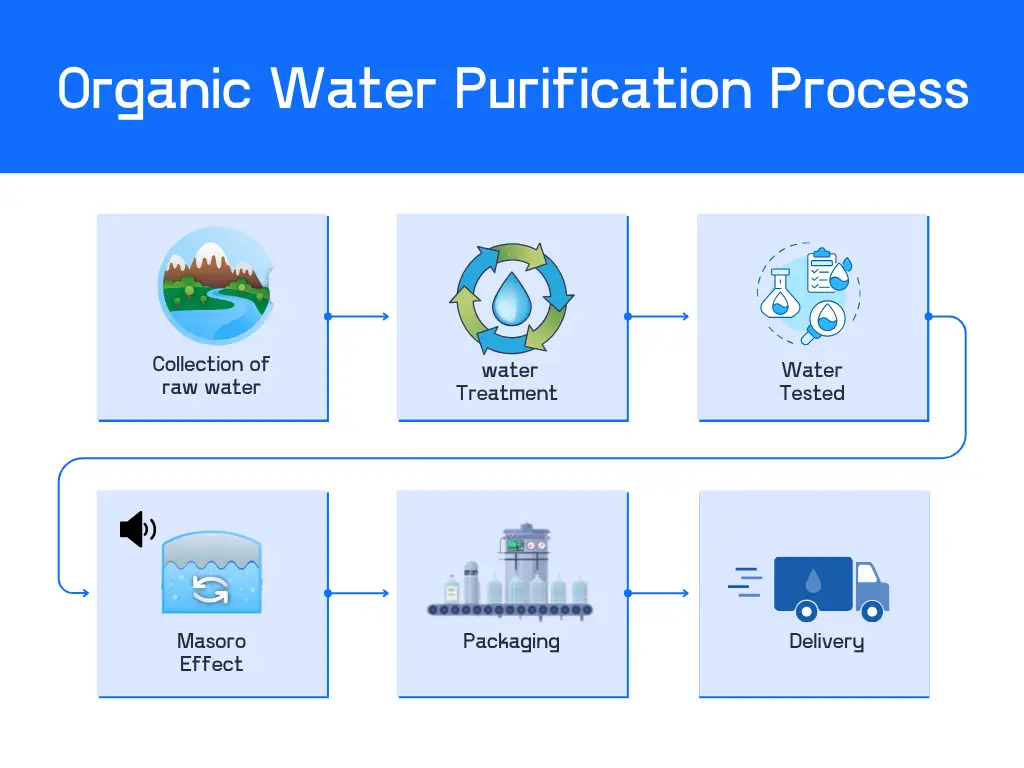
Steps of the water purification process
According to the nature of the water, we select the specific steps and technology for the purification of water. General steps are defined below:
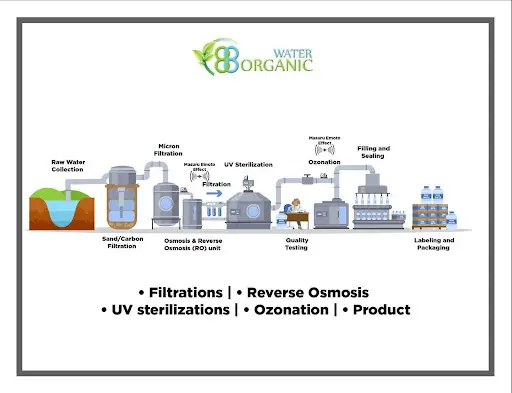
Aeration
In Aeration, raw water is collected into a large tank through pipes and efficient oxygen is introduced; this action improves the taste and smell of the water. It chemically oxidizes, which helps to remove gases and oxidizing agents from water.
Sedimentation (Storage or settling)
Filtration
Disinfection
How contaminants are removed from water? Disinfection follows filtration and employs chlorine, chloramine, ozone, or ultraviolet light. Chlorine ensures durability in the system; chloramine offers longevity, ozone rapidly oxidizes contaminants, and UV damages pathogen DNA. This stage produces clean water as a by -product, which is good for public health.
Advanced Purification Method
Benefits of Purification of Water
Water Purification leads the world into a green and environmental water safety. Some of the key benefits of purifying water are defined below:
- Improve Public Health After purification, we obtain clean water which is free from bacteria, viruses, and chemicals that cause waterborne diseases like cholera, typhoid, and diarrhea, reducing the rate of illness and death rate.
- Enhance industrial Products By the use of quality water in industries such as food, beverage, and pharmaceuticals, high water purity ensures consistent product quality and prevents contamination.
- Economic savings Clean water minimizes medical expenses related to waterborne diseases and promotes economic savings for an individual and for society as well.
- Support the Agriculture Sector Clean water for agricultural purposes, free from heavy metals, provides nitrogen, phosphorus, and potassium, leading to efficient growth of crops, which helps in increasing the economic growth of the country.
- Essential Element for Survival Water is essential for all living organisms, including plants, animals, and humans; without water, the world can’t imagine living. Purified water improves the health of humans, farms, and animals.
Water Purification for Home Use vs Industrial Use
We discuss the core use of purified water in homes and industries below:
Home: Designed for household water purification, daily needs which include drinking, cooking, bathing, and washing purposes.
- Keep in mind that water must align with consumer safety and taste standards, like NSF certifications.
Industry: hundreds of thousands of gallons/day are used in industrial sectors like manufacturing, power generation, or food processing.
- Require professional operation to deal with contaminated water treatment, due to their frequent servicing in the industry.
Conclusion
Water purification is an essential process designed to remove contaminants and make clean water access, agricultural, or industrial processes. Purification steps depend on the quality of the raw water and the level of purity required. Effective purification supports public health protection, protects infrastructure and the environment, enhances economic productivity, and provides healthy living.