
Is Water Organic or Inorganic? Scientif Explanation.
Published on January 2026| By Dr Altaf
Water is sometimes known as the essence of life.It keeps us alive. However, there is a question: Is water organic or inorganic?This article will explain this question by examining its classification and significance of water, analysing in which environment is it safe or not?
Why Water Is Inorganic in nature?
Chemistry is classified into molecular bonds depending on their bonding with various elements Organic and Inorganic. Since Life and Biochemistry is dependent on Organic compounds due to the Complexity and Diversity of Carbon bonding with various atoms present in nature, so where does Water stand?
What are Organic Compounds?
Definition
Combination of elements in which carbon atoms bonds with hydrogen atoms and some other elements. They are the basic parts of life and important for regular activities of living organisms.
Presence of Carbon
Carbon bonding: the carbon-hydrogen bond; is itself an organic compound. As these chemical bonds are absent in inorganic compounds
Examples
Proteins, lipids, carbohydrates and nucleic acids are organic substances important for biological activities.
What are Inorganic Compounds?
Definition
They are defined as compounds that generally lack carbon-hydrogen bonding. Inorganic compounds are important components for life and living processes and are produced from minerals.
Characteristics
What Gives Water Inorganic Nature?
Definition
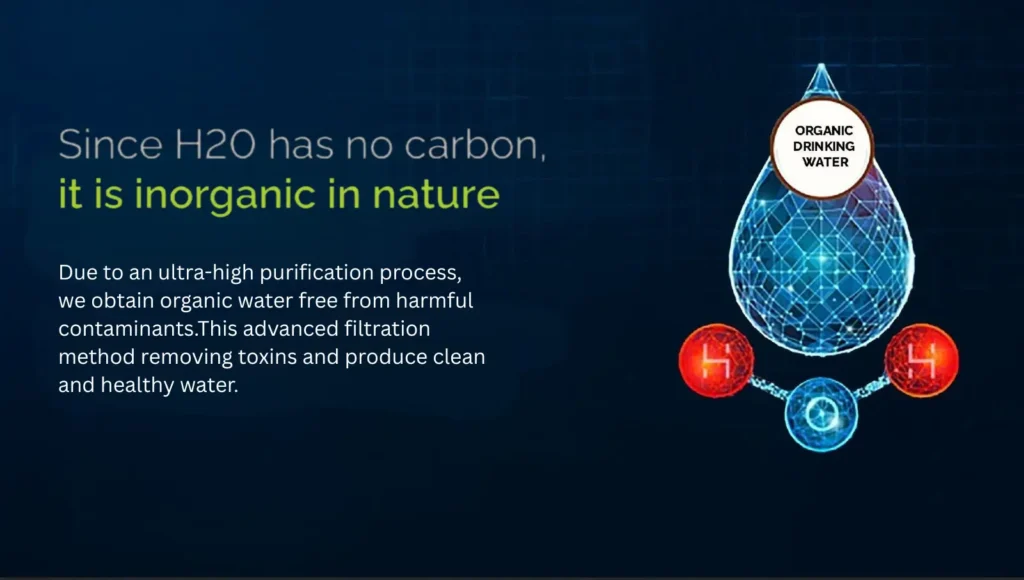
As water has oxygen atoms and hydrogen atoms, no oxygen, absence of carbon bonding makes it an inorganic compound. This explain water is inorgaic in nature that helps the environment to maintain its hygiene.
The Chemical Composition and Biological Role of Water
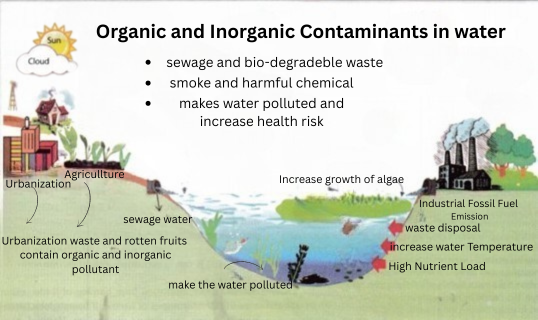
Organic & Inorganic Contaminants in Water
Types of Organic Compounds in Water
The absolute nature of water is inorganic, that’s why it dissolves many organic substances and restore freshness and hygine to the environment.Such substances appear in wastewater industrial discharge as well as agricultural runoff.
1 Such Pesticides and Herbicides
Uses: They are used in agricultural processes. Their frequent use raises questions about their effects on the crops, fruits, vegetables etc.
Health Risks
Polluting water can lead to serious, and can inhibit diseases, cell mutations such as cancer.
2 Factory Chemicals
Source These compounds are released during production and may end up in waters due to the wrong use of techniques. The toxicants released by factories not only contaminate sea or river water, it has hazardous effects on ecosystems.
Health Impact
Many serious health issues, reproductive issues including restructure of DNA because of constant contact are confirmed by WHO (World Health Organization) in many localities near industrial areas.
3 Pharmaceuticals
Entry Points: In several ways, medicines as wastes enter waterways, including treatment plants, and improper disposal of pharmaceuticals which include hospital wastes.
Other Organic Contaminants
- Oils: Oils from cities and factories can get into water and harm animals.
- Cleaning Byproducts: When chlorine reacts with organic materials in water, they are produced, and their long-term use can cause serious health issues.
- Creating Organic Compounds: New things are being made all the time, if not subjected can be harmful.
Different Types of Inorganic Contaminants in Water
Contaminated inorganic compounds also affect the water quality.
1 Heavy Metals
Sources are like heavy metals such as lead, mercury, and cadmium, that can enter water sources through
Health Effects
Heavy metals are linked to several health issues, including cancer.
Reducing the pollution of metals can be implemented through strict environmental control by companies’ waste management techniques.
2 Nitrate and Nitrite
They are commonly found in fertilizers and soil, and can pollute water.
- Runoff: Rain washes fertilizers into water, and lakes especially on farms.
- In Leaching, nitrate goes into the ground, messing up the water.
- Health Impact An increase in either of these can cause disease in infants, the most common being blue baby syndrome.
- Mitigation Strategies To stop it and keep an eye on things.
3 Fluoride
Why it’s added: Fluoride prevents tooth decay.
While beneficial in small amounts, more fluoride can lead to:
- Fluorosis: One of the reasons for discoloration of teeth is fluorosis.
- Bone Issues: Density of bone is highly subjected to fluoride exposure.
Regulation: Proper guidelines are essential to follow to avoid potential risk and overexposure of fluoride. Fortification should be bio-available as the body reacts on synthetic chemicals making them useless for bio-chemical proceses.
Additional Inorganic Contaminants
- Chlorides: The increase in chloride from road salt and factories, purity is affected. Whereas some of the chlorides are highly carcinogenic.
- Sulfur: it gives a foul taste and unpleasant smell in water, which have diverse effects on bowel movements.
- Phosphorus: Vegetation and marine life is highly affected by the increase of phosphorus.
No to pollutants and a big Yes for Clean drinking water
With the rise in awareness regarding water quality, the demand for effective organic water purification methods has increased significantly.While many people still ask, is water organic or inorganic, purified water remains chemically inorganic but can be treated with eco-friendly purification process.Companies like Organic Drinking Water, founded by Muhammad Nouman Khan in Karachi, offer purity and innovative solutions for those health conscious and provide clean water with a capacity of 19 liters of water bottles using our modern technique, which gives health and safety.

What does Organic Drinking Water serve?
Technology
Advanced filtration methods provide natural purification processes such as reverse osmosis and activated carbon filtration, are used. These methods are designed to remove both organic and inorganic contaminants effectively.
Quality Control
Quality Control, given by the Pakistan Standards and Quality Control Authority, ensures the quality standards of water.
Community Engagement
Community teaches people about water quality standards and saving water.
Final thoughts about organic and inorganic Compounds
Both organic and inorganic waste has serious consequences on human life polluting the water completely. Organic wastes are not only dead organisms, Organic waste also comprises toxic factory chemicals. Inorganic wastes include toxic waste dump as the gift of industrialization suffocating mother nature. The pollutants remain in the depths of the sea or lake, keep shedding their toxicity and make life on water and on land difficult.
Water is very important for life, pollutants are poison which waste this gift of God. Giving hard time for life to find its potential. Organic drinking water gives us clean and healthy water.